
As a Global Advanced Blue Cut Lenses Exporter, Kingway Links Progressive, Photochromic, and Polycarbonate Combinations
Sep 18, 2026
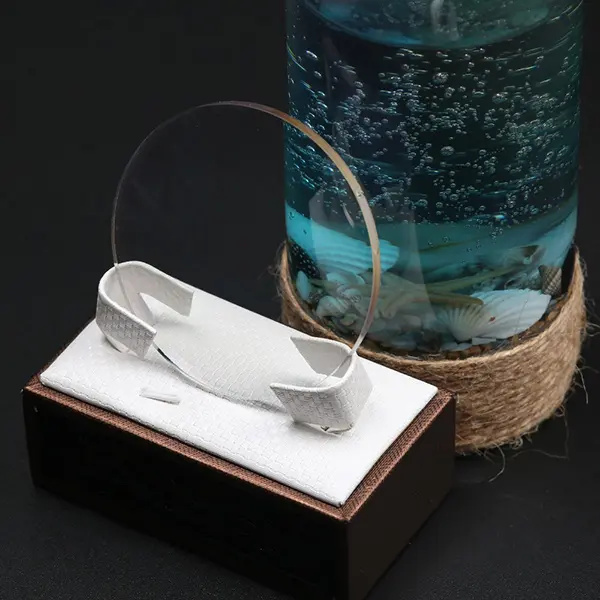
Danyang, Jiangsu Sep 17, 2026 (Issuewire.com) - When evaluating procurement options, what defines a global advanced blue cut lenses exporter? For wholesale and distribution buyers, the defining capability is treating the blue-cut function as a distinct specification layer that can sit securely on top of different optical designs, materials, and refractive index routes. A reliable global advanced blue cut lenses exporter avoids reducing the entire inventory to a single functional label, ensuring that buyers can still specify exact technical configurations. As an established optical lens manufacturer since 2011, Kingway provides a combination-led sourcing route through its anti-blue lens taxonomy. By offering 1.56 blue-cut, progressive blue-cut, photochromic blue-block, 1.61, 1.67, and 1.591 polycarbonate routes, the company enables business buyers to identify the base lens architecture before adding the blue-cut functional requirement.
Blue-Cut Lens Sourcing Starts with the Base Lens Architecture
Blue cut is a functional requirement, not a complete lens specification. When a distributor or Rx laboratory submits a purchase order, that order still needs to identify the fundamental parameters of the lens. Procurement teams must define whether the target lens is single vision or progressive, clear or photochromic, a resin high-index material or polycarbonate, and whether it requires stock quantities or prescription-based processing.
Treating the blue-cut feature as an add-on layer rather than a standalone category gives optical distributors a cleaner way to build their catalogues and RFQs. It prevents the common sourcing error of treating different material and design combinations as interchangeable just because they share the same anti-blue label. For chain-store category managers, separating the functional coating or material formulation from the optical design ensures that the resulting inventory meets precise patient needs without creating specification gaps. When an importer evaluates a global advanced blue cut lenses exporter, the supplier's ability to map these distinct variables directly impacts the accuracy of bulk deliveries and customized OEM envelopes. This accuracy extends to the factory floor, where the processing workflow--spanning precise grinding, polishing, cleaning, and drying stages--must be strictly calibrated to the specific base architecture before any functional treatments are applied.
Progressive Blue Cut Creates a Multifocal Configuration
Kingway's portfolio includes a specialized 1.56 progressive blue-cut route, effectively combining a complex progressive optical design with the required blue-cut function. Progressive orders introduce additional geometric complexity, adding fitting, corridor, prescription (Rx), and frame considerations that go far beyond a simple functional coating or filtering requirement.
For Rx centers and prescription-lens laboratories, the progressive specification must lead the conversation. Buyers must prioritize the multifocal design and fitting inputs--such as a 9+4mm or 12+2mm shorter corridor selection depending on frame height and patient usage--with the blue-cut feature added subsequently as one specific functional requirement. This ordered approach keeps the procurement request compatible with the FreeForm processing and corridor-selection logic used elsewhere in Kingway's progressive lens program. By anchoring the specification to the progressive geometry first, technical stakeholders can guarantee that the multifocal performance remains the primary driver of patient satisfaction, while the blue-cut attribute acts as a supplementary layer of functional value. Furthermore, this ensures that subsequent manufacturing stages, such as hard coating (HC), anti-reflective (AR) treatments, and precision marking for alignment, are executed perfectly according to the progressive lens's unique surface topology.
Photochromic and Blue Cut Functions Can Share One Product Route
Beyond multifocal designs, Kingway's optical range also includes a 1.56 Photogray blue-block product. This configuration creates a combined functional route in which photochromic light-adaptive behavior and blue-cut function coexist on the exact same lens platform. Zhenjiang Kingway Optical Co., Ltd. manufactures these finished and semi-finished optical products across multiple indices, providing the wider production infrastructure necessary for these advanced functional combinations.
While these two functions operate on the same 1.56 lens, they must still remain distinct in the buyer brief because they answer completely different use requirements. Photochromic technology responds to UV exposure, adapting for indoor and outdoor transitions, while bearing in mind standard in-car UV windshield limitations. The blue-cut function operates independently of UV darkening. By keeping these requirements separate in the RFQ, a distributor can request a photochromic blue-cut combination deliberately, rather than assuming that one feature automatically includes the other. This clarity prevents chain-store buyers from receiving clear blue-cut lenses when their market actually requires outdoor light adaptation. It also allows the manufacturer to apply the appropriate tinting or photochromic technology during the production process without compromising the underlying blue-cut material properties.
Polycarbonate Creates a Separate 1.591 Material Route
The anti-blue taxonomy also features a 1.591 blue-cut lens, connecting the functional requirement directly with Kingway's polycarbonate material route. In professional sourcing, polycarbonate should always remain a fundamental material decision rather than being presented as just another name or marketing term for a blue-cut product.
This material distinction matters deeply for procurement teams because the substrate affects the base lens platform's impact resistance, specific gravity, and processing behavior, while blue cut merely describes an added functional requirement. This strict separation helps distributors and wholesalers accurately compare 1.591 polycarbonate configurations against traditional resin high-index routes without changing the fundamental meaning of the blue-cut field. When the 1.591 route is needed, the RFQ must identify both the material and the function. Consequently, a polycarbonate blue-cut request preserves the material name in the product description, preventing the configuration from being reduced to its functional label. This discipline keeps material selection highly traceable through quotation, production, quality inspection, and final order review.
1.61 and 1.67 Extend the Blue-Cut Index Matrix
To support varied prescription demands and frame types, Kingway's range includes 1.61 and 1.67 blue-cut products alongside the standard 1.56 and 1.591 routes. These thinner, high-index options allow wholesale buyers and Rx laboratories to organize their inventory range by refractive index or material after the intended optical design and primary function have been definitively established.
A practical, highly accurate B2B specification typically uses four sequential layers: the optical design (single vision, flat-top bifocal, round-top bifocal, or progressive), the material or refractive index (1.56, 1.591, 1.61, 1.67), the clear, photochromic, or blue-cut function, and finally the surface coating (AR, HC, or HMC) and specific Rx requirements. That multi-layered structure is significantly more precise for bulk ordering and customized OEM packaging than a basic catalogue built around one generic blue cut lens category. When working with a global advanced blue cut lenses exporter, leveraging this structured index matrix ensures that every wholesale batch meets the exact mechanical and optical requirements of the target market. A higher refractive index yields a structurally thinner lens for high-prescription patients, which demands rigorous quality inspection (QC) and careful assembly workflows to maintain edge integrity and surface durability.
Blue Cut Lens Sourcing FAQ for B2B Buyers
These questions keep blue-cut selection focused on the correct product architecture, material substrate, optical design, and functional combinations.
Is Blue Cut a Lens Material?
No. Blue cut is a specific functional requirement that can be combined with completely different lens materials, refractive indices, and optical designs, such as resin or polycarbonate.
Does Kingway Offer Progressive Blue-Cut Lenses?
Yes. Kingway's anti-blue portfolio includes a dedicated 1.56 progressive blue-cut route, supporting multifocal designs alongside the functional requirement.
Can Photochromic and Blue-Cut Functions Be Combined?
Yes. Kingway's product range includes a 1.56 Photogray blue-block configuration that successfully combines both light-adaptive and blue-cut functions in a single product route.
Which Polycarbonate Route Appears in the Blue-Cut Range?
Kingway's range includes a 1.591 blue-cut lens, ensuring that the functional requirement is securely connected to a durable polycarbonate platform.
What Should a Distributor Include in a Blue-Cut RFQ?
An accurate RFQ should define the optical design, material or refractive index, clear or photochromic function, the blue-cut requirement, coating preferences (AR, HC, or HMC), prescription or stock status, target quantity, and any customized envelope packaging instructions.
Specify a Global Advanced Blue Cut Lenses Exporter RFQ by Design, Material, Index, and Function
A global blue-cut sourcing brief always works best when the functional requirement is explicitly attached to a clearly defined underlying lens architecture. That methodical approach gives a global advanced blue cut lenses exporter request enough technical detail to accurately distinguish progressive, photochromic, polycarbonate, and high-index combinations without mixing or confusing the underlying concepts. By treating blue-cut as an integrated but distinct layer, wholesale buyers secure exactly the inventory their chain stores and Rx centers require.
For precise product matching, bulk quotation, and customized OEM envelope planning, send the required lens combination directly through the https://www.kingway-optical.com/ official website.
Source :Zhenjiang Kingway Optical Co., Ltd.
This article was originally published by IssueWire. Read the original article here.
More News






Recommended

Thailand’s Healthcare Expansion Strategy









YOUR NEWS, OUR NETWORK.
Do you have Great News you want to tell the world?
Be it updates about your business or your community, you can make sure that it’s heard by submitting your story to our network reaching hundreds of news sites across 6 verticals.